
A Day in the Life of a Tourist in Lebanon
Lebanon has the landscapes of Switzerland, the nightlife of Ibiza, the cuisine of Italy, and the history of Greece, but what is it really like to experience the country as a first-time visitor?
To truly understand Lebanon’s tourism strengths and weaknesses, let’s take a real-time, step-by-step breakdown of what a tourist sees, eats, and feels in a 24-hour stay in Beirut.
This article will highlight the best and worst aspects of Lebanon’s tourism experience, using real-world examples, data comparisons, and global best practices.
9:00 AM: Arrival at Beirut-Rafic Hariri International Airport
Weakness: Airport Experience & Transportation
- First impression matters: Tourists arriving in Lebanon face long immigration lines, outdated airport infrastructure, and overpriced taxis with no meter.
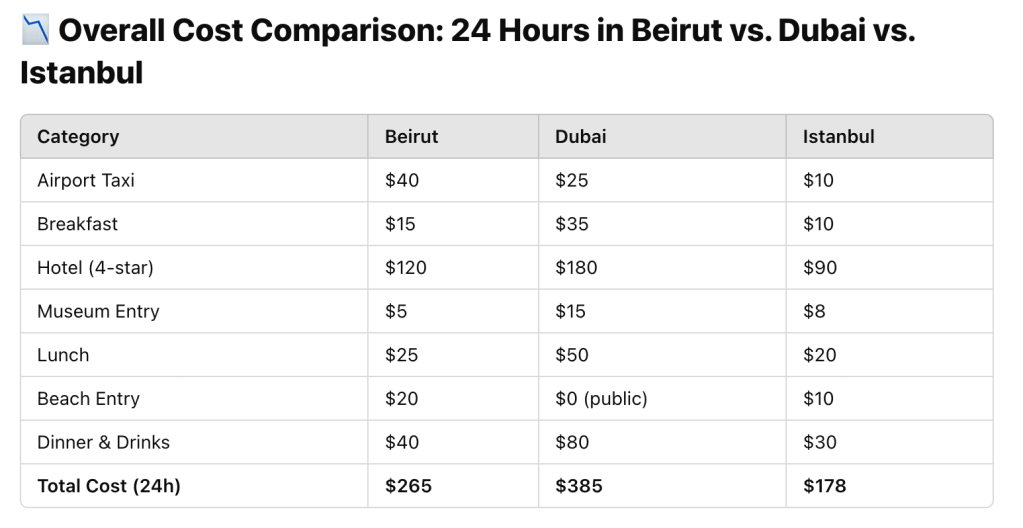
- Airport Taxis are a disaster: A 15-minute ride to the city costs $40-50 USD, while in Dubai ($25) or Istanbul ($10), taxis have fixed, affordable fares.
- No public transport options: Unlike Dubai, Istanbul, or Paris, there’s no airport metro, bus network, or ride-sharing alternatives.
Solution & Global Example: Dubai’s Airport Experience
- Dubai International Airport (DXB) is ranked #1 in the world in passenger satisfaction due to fast immigration, a high-speed metro link, and transparent taxi fares.
- Solution for Lebanon: Implement an official airport taxi rate card, online ride-hailing services, and an express airport shuttle.
10:00 AM: Breakfast at a Café in Beirut
Strength: Lebanon’s World-Class Café Culture
- Tourists love Lebanese breakfasts, manakish, labneh, za’atar, and fresh juices.
- A breakfast for two in Beirut ($15-20) is cheaper than Dubai ($35) but more expensive than Istanbul ($10).
- Cafe Culture is a major attraction: Beirut ranks among the top 10 coffee destinations in the Middle East.
Weakness: Price & Service Inconsistency
- Many tourists complain about fluctuating prices, a coffee could cost $2 in one café and $7 in another, with no clear reason.
- Slow service and inconsistent hospitality, some cafés excel, others ignore tourists.
Solution & Global Example: Paris’ Café Experience
- Paris cafés are world-famous because they offer a standardized experience, fixed pricing, professional service, and iconic atmosphere.
- Solution for Lebanon: Standardized menu pricing and tourism service training for waiters.
11:00 AM: Sightseeing, Downtown Beirut & Historical Sites
Strength: Rich History & Landmarks
- Beirut has Roman ruins, Ottoman architecture, and modern urban charm.
- The National Museum of Beirut is highly rated (4.5 stars on TripAdvisor).
Weakness: Lack of Signage & Accessibility
- Many tourist sites lack proper English/Arabic signage explaining historical importance.
- Few guided tours and walking trails compared to European cities.
- Traffic congestion ruins the experience, walking in Downtown Beirut is challenging due to narrow sidewalks and chaotic roads.
Solution & Global Example: Rome’s Historical Tourism Model
- Rome has free guided city tours, clear historical plaques, and pedestrian-only zones.
- Solution for Lebanon: Introduce a city-wide tourism app with historical information, create pedestrian-friendly streets, and implement guided tours.
2:00 PM: Lunch at a Traditional Lebanese Restaurant
Strength: Lebanese Food is a Tourism Magnet
- Lebanese cuisine ranks among the top 10 globally in multiple food rankings.
- A typical mezze-style lunch ($25 per person) is cheaper than Dubai ($50) but slightly more expensive than Istanbul ($20).
Weakness: Overpriced & Tourist-Targeted Scams
- Some restaurants charge foreigners higher prices or add extra service fees without notice.
- No transparency in pricing, some tourists report paying $100+ per meal due to surprise charges.
Solution & Global Example: Thailand’s Transparent Food Culture
- Bangkok has government-mandated price lists in tourism areas to prevent overcharging tourists.
- Solution for Lebanon: Enforce tourist price regulations and promote a “Fair Price Restaurant” certification.
4:00 PM: Beach & Relaxation
Strength: Mediterranean Beauty
- Lebanon’s beaches rival those of Greece and Italy, attracting tourists with turquoise waters and mountain views.
- $20 entry fees at private beaches are cheaper than Mykonos ($50) but higher than Antalya ($10).
Weakness: Limited Public Access
- 90% of Lebanon’s beaches are privatized, making it expensive for tourists.
- Public beaches lack proper maintenance and security.
Solution & Global Example: Spain’s Beach Tourism Model
- Spain enforces free beach access laws, making coastal tourism a $60 billion industry.
- Solution for Lebanon: Create more public beaches with clean facilities and security patrols.
8:00 PM: Nightlife in Beirut
Strength: Lebanon’s Nightlife is World-Class
- Beirut ranks among the top 10 nightlife cities in the world.
- Clubs in Mar Mikhael, Gemmayzeh, and Jounieh attract international visitors.
Weakness: Overpriced Drinks & Unfair Entry Policies
- Tourists often pay higher entrance fees than locals.
- A cocktail in Beirut costs $12-15, similar to Dubai but more than Istanbul ($8).
Solution & Global Example: Amsterdam’s Fair Pricing Model
- Amsterdam’s clubs have transparent entrance fees & digital ticketing systems.
- Solution for Lebanon: Introduce tourist discount cards and regulate pricing consistency in bars.
Key Takeaways & How Lebanon Can Improve
- Lebanon has unmatched tourism assets, history, beaches, food, and nightlife.
- Tourists struggle with pricing, transport, and inconsistent service.
- By fixing infrastructure, pricing, and transparency, Lebanon could increase tourism revenue by 30-50%.
Final Thought: Every Lebanese Is Part of the Experience
Tourism success isn’t just about attractions—it’s about how we treat visitors. Every taxi driver, café owner, and hotel employee shapes a tourist’s impression.
If Lebanon wants to compete with Dubai, Istanbul, and Mykonos, it must enhance the tourist experience from the moment they land.
 Brand Lebanon
Leave a comment